
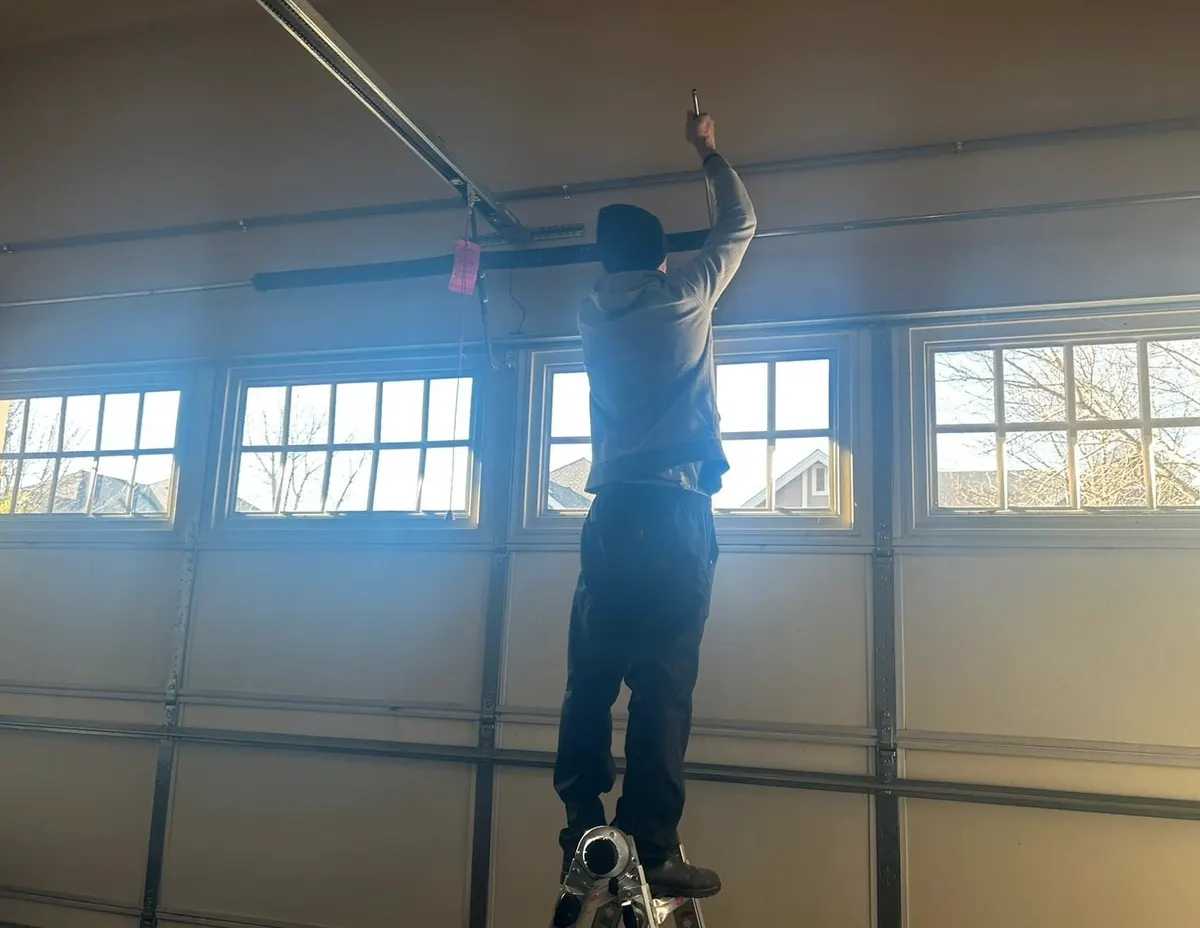
The Moment You Notice Something's Wrong
It usually starts small. You hit the opener button and the door groans instead of gliding. Or you walk past the garage and hear a loud bang, like a gunshot, and now the door won't budge at all. Maybe you look up and notice the torsion spring above the door is split clean in two, the coils hanging loose instead of wound tight. Your first instinct might be to grab a wrench, watch a video, and handle it yourself over the weekend. That instinct is exactly how people end up in the emergency room.
What a Garage Door Spring Actually Does
A standard garage door weighs somewhere between 130 and 400 pounds, depending on the material and size. The spring system — torsion springs mounted above the door, or extension springs along the tracks — is what counterbalances that weight so the door feels light enough to lift by hand or move with a modest motor. To do that job, the spring is wound under extreme tension, storing enough mechanical energy to lift hundreds of pounds in a fraction of a second.
That stored energy doesn't care whether it's released in a controlled way by a trained technician or by someone loosening the wrong bolt. When a wound torsion spring lets go unexpectedly, it can whip a wrench out of your hand, snap bones, or send metal fragments flying hard enough to break skin. Extension springs that aren't properly contained by safety cables can launch across a garage like a slingshot.
How Badly It Can Go Wrong
The injuries tied to DIY spring work follow a pattern: crushed or broken fingers from hands caught between coils, deep lacerations from flying metal, facial and eye injuries, and torn tendons from a winding bar slipping out of the technician's grip. In worse cases, people lose fingers or suffer serious head trauma when the door itself drops unexpectedly during the repair because nothing was holding it in place once the spring was disconnected.
It's also worth remembering that garage doors in this area go through real wear cycles. Hot inland summers expand metal components, winter rain introduces moisture and rust at the coil ends, and the dry, dusty stretches between seasons wear down lubrication faster than most homeowners expect. A spring that's been cycling through these conditions for years is often more corroded and unpredictable than it looks from the ground.
What Actually Prevents a Trip to the ER
If you've spotted a broken or visibly worn spring, here's what matters:
- Don't disconnect the opener and try to force the door open or closed. Without the spring doing its job, the full weight of the door is unsupported.
- Don't attempt to remove or rewind a torsion spring yourself. This requires specific winding bars, not screwdrivers or makeshift tools, and the sequence matters.
- Don't cut or loosen an extension spring that still has tension in it, even if it looks stretched out or damaged.
- Keep the area clear. If a spring has already broken, keep kids, pets, and vehicles away from the door path until it's been serviced.
- Avoid using the garage door at all once you notice sagging, unusual noise, or a door that closes unevenly. Continuing to operate it can turn a repair into a safety incident.
- Photograph the spring and note which side it's on (left or right, as you face the door from outside) so a technician can bring the correct replacement part on the first visit.
Signs the Spring Is the Real Problem
Not every noisy or stuck door means a broken spring, but a few signs point there specifically: the door feels dramatically heavier when lifted manually, the opener strains or reverses without finishing its cycle, one side of the door appears higher than the other, or you can visibly see a gap in a torsion spring's coil. If any of these show up, treat it as a spring issue rather than a general tune-up item.
When to Call Rowland Heights Garage Door
This is one of the few repairs where calling in help isn't about convenience, it's about avoiding real physical harm. When you contact us for a Spring Replacement, we bring properly rated springs matched to your door's weight and size, use the correct winding tools, and release or load tension in a controlled way. While we're there, we'll often check the rest of the hardware as part of a broader Garage Door Maintenance visit, since cables, rollers, and hinges tend to show wear around the same time a spring fails, especially after a full year of inland heat and winter rain cycles.
If your garage door has gone quiet, heavy, or stuck, don't reach for a wrench. Call Rowland Heights Garage Door and we'll get it moving safely again, the right way, the first time.